
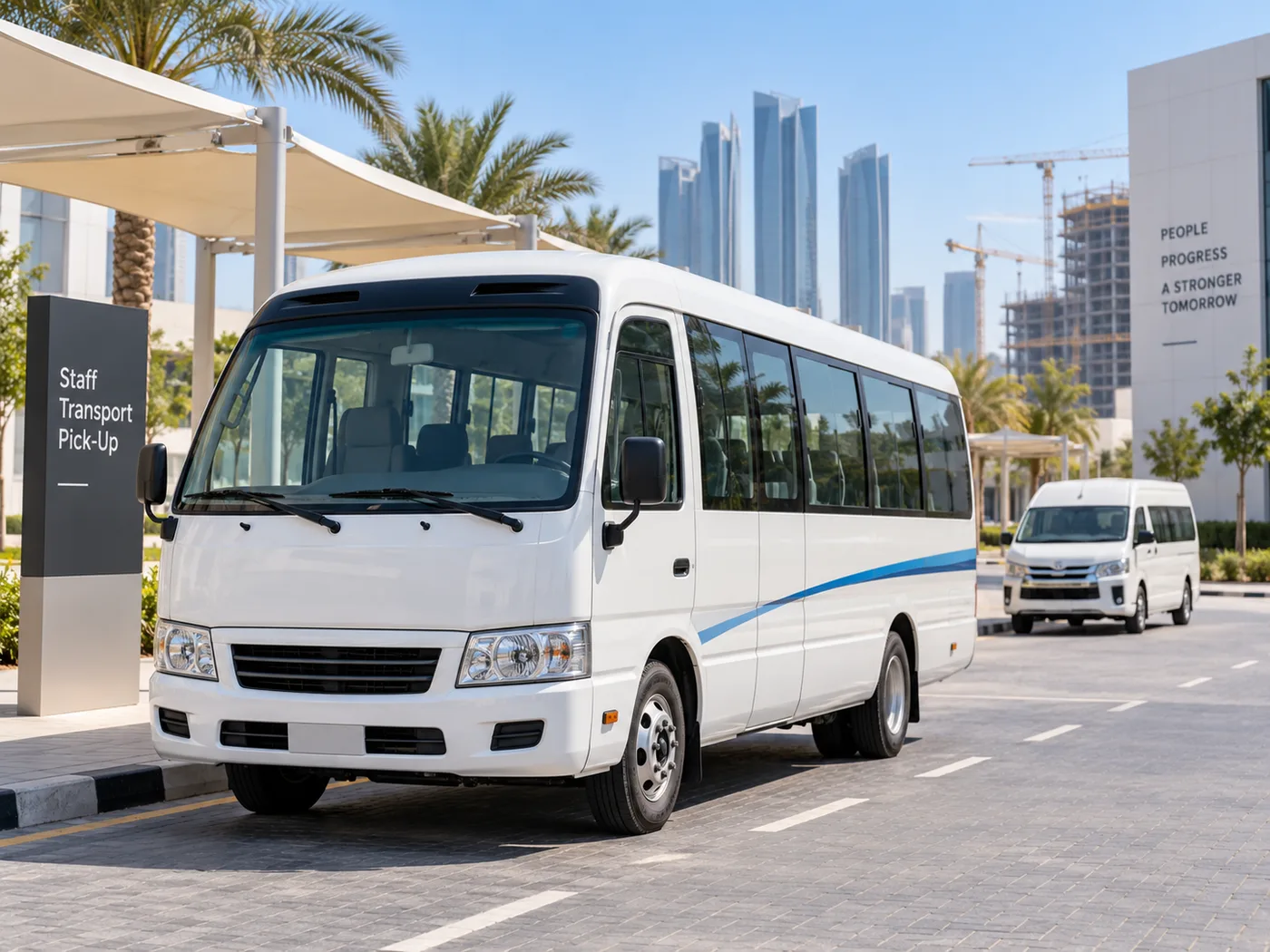
Moving a group reliably starts with a passenger plan. Give the expected number of people and whether that number changes by day or shift. Mention luggage, tools or other items that will travel with the group, because seating and storage needs are different questions. If the journey is for a construction site, event or facility, include the project's access rules rather than assuming a vehicle can use the public-facing entrance.
Write down each pickup and drop-off point with a map pin and a recognisable landmark. A street name alone may leave several possible meeting places. For a multi-stop route, show the order of stops and which passengers join or leave at each one. Ask a representative at each end to check whether the chosen point is suitable for a vehicle to wait briefly and for passengers to gather without obstructing other traffic.
Give the actual schedule: required arrival time, work or event start, release time and any planned return trip. Shift changes often involve a narrow handover period, so describe what must happen rather than giving only a departure time. If overtime, weekend work or changing headcounts are possible, explain how those changes will be communicated. A recurring route should have one person responsible for approving schedule updates.
Confirm the practical journey details before booking. Who will meet the driver, how are passengers identified, and what happens if a gate is closed or a pickup point moves? Ask the provider what vehicle and operating arrangement are suitable for the group and route, and what information is needed to confirm the service. Any site-specific safety or documentation requirement should be raised before the first trip.
Great Apple focuses on water transport and can also discuss mini bus requirements as part of wider site logistics. A concise enquiry with passenger count, stops, dates, times, access instructions and contact names helps the team assess the request. It also gives your staff a simple route plan they can follow when the journey begins.