
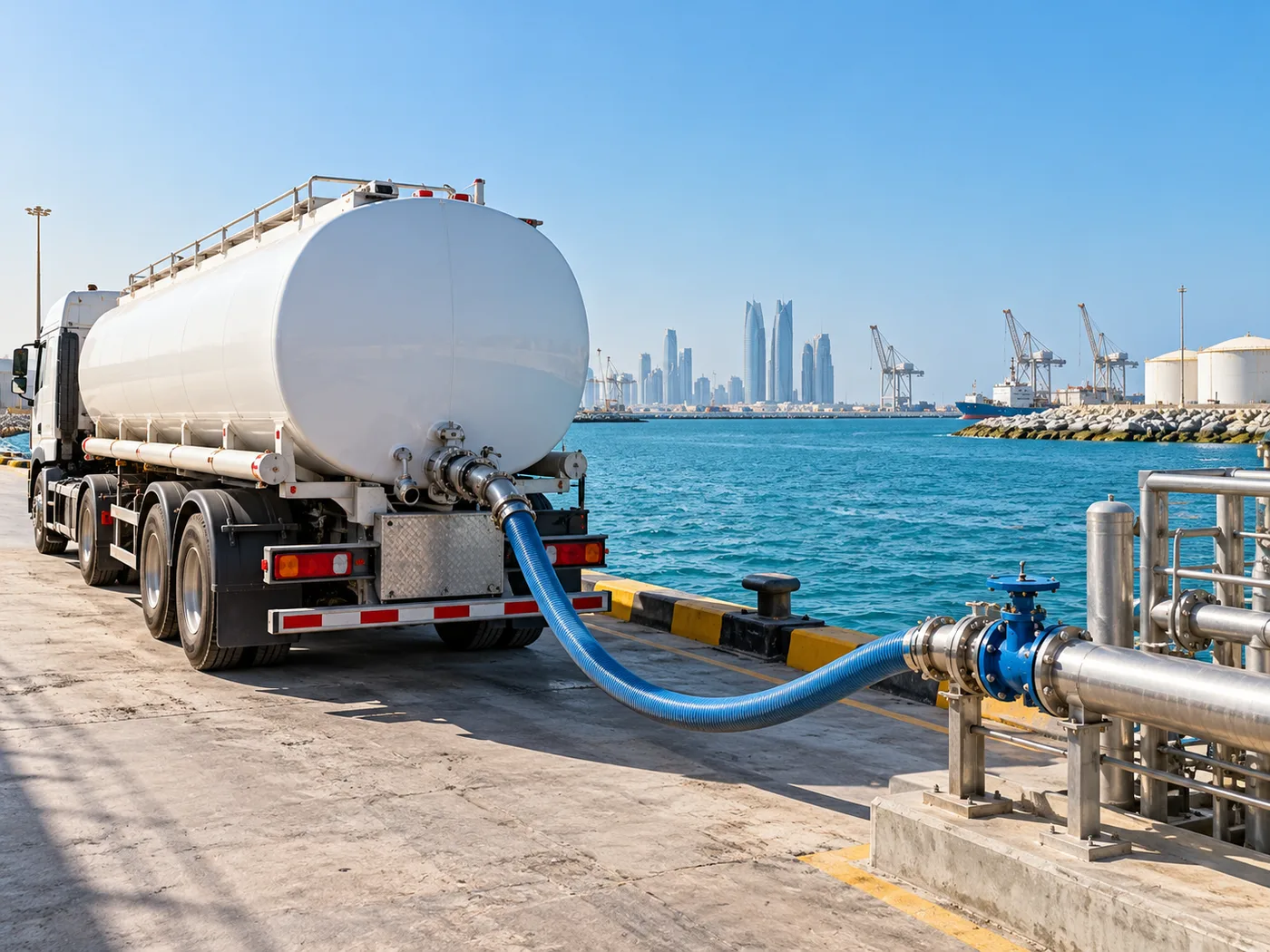
Salt water transport is a purpose-specific movement. A coastal project, testing activity or industrial process may each mean something different by “salt water.” Before arranging a tanker, describe the intended use and any measurable characteristics in the project specification. Salinity, sediment tolerance and other acceptance criteria should come from the responsible technical team. The transport discussion can then start with a defined material rather than a broad name.
Identify exactly where the water would be collected and who controls that source. Access to a coastal area, intake or storage point should never be assumed. Confirm that the collection arrangement is permitted and that the person authorising it can be contacted on the day. The same applies at the destination: name the receiving tank or process, its connection and the person who will accept the load. If the movement involves a third-party facility, obtain its handover instructions in advance.
Tell the provider about any compatibility requirements. Salt water can be demanding on equipment and receiving materials, so the operator needs to assess the tanker and transfer arrangement for the specified job. Share the estimated volume, desired number of movements and any requirement to keep the material separate from other water categories. Do not presume that a tanker used for drinking water, irrigation water or wastewater is interchangeable with one proposed for salt water.
Site access still matters as much as the water itself. Send a map pin for both ends, gate details, stopping space and any restrictions on vehicle movement. Describe hose reach, elevation or a narrow transfer area. For a project operating in stages, show the sequence of collections and deliveries and identify when the receiving capacity will be available. If a test result or inspection must precede a load, make that a clear hold point in the schedule.
A good quotation request brings these facts together: intended use, source, destination, quality specification, volume, access, timing and responsible contacts. Ask what documentation or local approvals the proposed movement requires. That conversation helps establish whether the service can be arranged as specified and avoids treating salt water as a generic load.